

Hamstring strain recovery time ranges from a few days for a mild pull to several months for a severe tear. With a steady, progressive rehab plan, most active adults with a moderate strain return to full speed in about 3 to 8 weeks.
The grade of your injury sets the starting point. Your first few weeks decide whether you heal on schedule or hurt the same muscle again.
Before you dig into the details, here are five things you can do today.
- Stop sprinting, kicking, and hard stretching until walking feels normal.
- Walk as much as you comfortably can, since gentle movement helps the muscle heal.
- Start easy, pain free hamstring squeezes within the first few days.
- Write down the day and exactly what you were doing when it happened.
- Book an assessment if you felt a pop, see heavy bruising, or struggle to walk.
What Is a Hamstring Strain?
A hamstring strain is a stretch or tear in one or more of the three muscles along the back of your thigh. It happens when the muscle takes on more force than it can handle. Fast running, jumping, and sudden lunges are common triggers.
According to Cleveland Clinic, a hamstring strain is one of the most common sports injuries. People also call it a pulled hamstring or a torn hamstring, and all three names describe the same problem.
The Three Muscles Behind Your Thigh
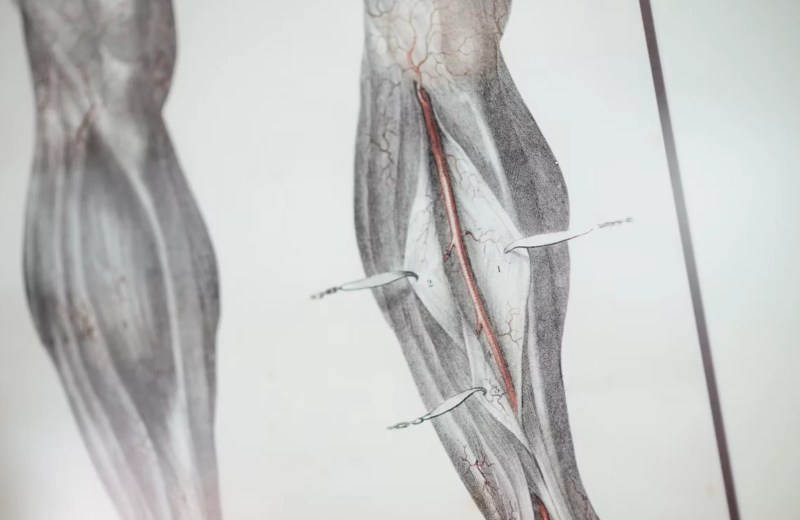
Your hamstrings include the biceps femoris on the outside and the semitendinosus and semimembranosus on the inside. Together they bend your knee and extend your hip.
The biceps femoris is the one that gets hurt most often. It works hardest when your leg swings forward and your foot is about to hit the ground during a sprint.
Overloading Versus Overstretching
Most hamstring strains fall into two groups. Each one tends to heal on a different timeline.
- Overloading injuries happen during high speed running, when the muscle is long and working hard to slow your leg down.
- Overstretching injuries happen in positions like a high kick, a dance split, or bending over to lift something with straight knees.
Overstretching injuries often feel milder at first. Yet they often involve the tendon near your sitting bone. That can make them slower to settle than you expect.
How Long Does a Hamstring Strain Take to Heal?
A mild hamstring strain usually heals in about 1 to 3 weeks. A moderate strain often needs 3 to 8 weeks. A complete tear can take 3 months or longer, especially after surgery.
Cleveland Clinic notes that a grade 1 injury may need less than a week to feel better. Grade 2 and grade 3 injuries can take up to several months. Feeling better and being ready for full sprinting are two different milestones, though.
| Grade | What It Means | Typical Signs | Typical Recovery Time |
|---|---|---|---|
| Grade 1 | Mild strain with very little torn muscle | Tightness, mild pain, normal walking | A few days to 3 weeks |
| Grade 2 | Partial tear of the muscle | Sharp pain, limping, some bruising, weakness | About 3 to 8 weeks |
| Grade 3 | Complete tear of the muscle or tendon | Pop, heavy bruising, trouble walking, a gap you can feel | 3 to 6 months or more |
These ranges are averages. Your age, your sport, and where in the muscle the tear sits can all move your timeline up or down.
What Should You Do in the First 48 Hours After a Hamstring Strain?
In the first 48 hours, protect the muscle, keep it moving gently, and avoid anything that causes sharp pain. Those early choices set the pace for the rest of your recovery.
Here is a simple plan for the first two days.
- Stop the activity: Finishing the game on a strained hamstring often turns a mild injury into a bigger one.
- Keep walking: Take short, easy steps around the house and avoid long strides.
- Use compression: A snug wrap can limit swelling and make walking feel steadier.
- Elevate when resting: Prop your leg up to help control swelling.
- Skip heat, alcohol, and deep massage: These can increase bleeding in the tissue early on.
Pay attention to how you walk on day two. A clear limp or spreading bruise usually points to a grade 2 strain or higher.
How Do You Know Which Grade of Hamstring Strain You Have?
You can often estimate the grade from how the injury felt and how well you walk the next day. A physical therapist confirms it with strength, range of motion, and touch tests.
Signs of a Grade 1 Strain
- Tightness or a cramp feeling in the back of the thigh
- Pain when you stretch or run, but not much when you walk
- Little or no bruising
Signs of a Grade 2 Strain
- A sudden, sharp pain that stopped you mid activity
- A limp and pain with bending the knee against resistance
- Bruising that shows up a day or two later
Signs of a Grade 3 Strain
- A pop you felt or heard at the moment of injury
- Large bruising that spreads down toward the knee
- Real difficulty walking or putting weight on the leg
If you notice grade 3 signs, get checked quickly. Some complete tears near the sitting bone need a surgical opinion within the first few weeks.
What Happens During Each Phase of Hamstring Healing?
Hamstring healing moves through three overlapping phases. Each phase has its own goals, and rushing ahead is the most common reason recovery stalls.
Phase 1: Calm It Down (Days 1 to 5)
Your body starts cleaning up damaged tissue and laying down new fibers. Your job is to protect the area without shutting it down completely.
- Walk with short, comfortable steps.
- Use ice or compression for comfort if it helps.
- Skip aggressive stretching and deep massage for now.
Phase 2: Rebuild Strength (Roughly Week 1 to Week 4)
New tissue forms, but it is weak and disorganized at first. Loading it with the right exercises helps those fibers line up and get stronger.
This is where most of your progress happens. You move from gentle holds to bridges, then to exercises that load the hamstring while it lengthens.
Phase 3: Get Back to Speed (Roughly Week 3 Onward)
The final phase prepares the muscle for the forces of sprinting, cutting, and kicking. You build up running speed in steps and add sport drills.
Many people feel fine by this point and skip it. That shortcut explains a large share of repeat injuries.
Which Exercises Help a Pulled Hamstring Heal Faster?
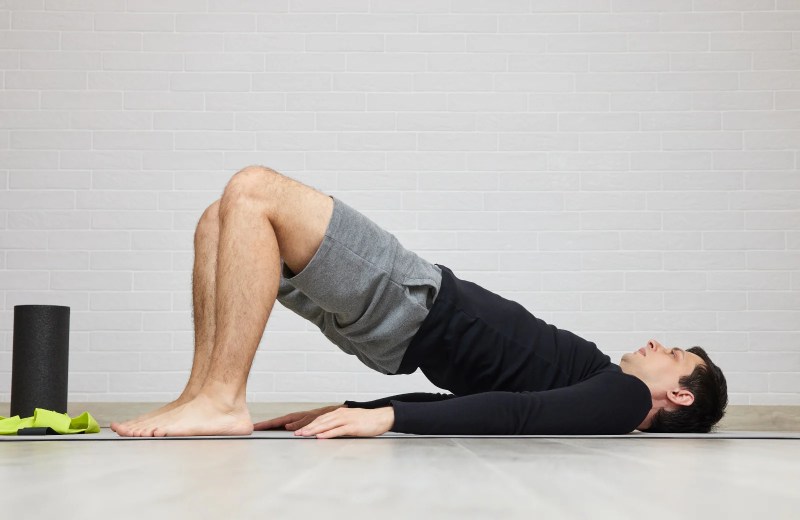
The exercises that help most are the ones that load the hamstring gradually and safely. Start with gentle holds, then progress to bridges, lengthening exercises, and running drills as pain allows.
Use a simple rule. Mild discomfort that fades within a few minutes is fine, but sharp pain means you need to back off.
Early Exercises
- Hamstring isometric squeeze: Lie on your back with your knee bent and press your heel into the floor for 5 to 10 seconds.
- Double leg bridge: Push through your heels, lift your hips, and hold for a breath at the top.
- Easy walking: Build daily steps steadily as your limp fades.
Middle Stage Exercises
- Single leg bridge: Raise one foot and lift with the injured side.
- Romanian deadlift: Hinge at the hips with a soft knee bend and a light weight.
- Sliding leg curl: Lie on your back with heels on a towel or slider and curl them toward you.
Later Stage Exercises
- Nordic hamstring curl: Kneel with your ankles anchored and lower your body slowly forward.
- Extender exercise: Hold your thigh at 90 degrees and slowly straighten your knee.
- Running drills: Add high knees, skips, and short strides at gradually faster speeds.
Lengthening exercises like the Nordic curl and the extender deserve special attention. Research on athletes supports training the muscle in long positions to help reduce repeat strains.
What Slows Down Hamstring Strain Recovery Time?
The biggest thing that slows recovery is doing too much too soon, closely followed by doing too little. Both extremes leave the muscle weaker than it needs to be.
Several other factors can stretch out your timeline.
- Aggressive stretching early on: Pulling hard on fresh tissue can make the tear worse.
- Complete rest: Weeks on the couch lead to stiffness and weakness.
- Tendon involvement: Tears that reach the tendon usually heal slower than tears in the muscle belly.
- A past hamstring injury: Scar tissue and old weakness can make healing slower.
- Poor sleep and low protein: Your muscle rebuilds best when you recover well.
Age plays a role too. Older athletes tend to need a bit more time, so plan for it rather than fighting it.
When Can You Run or Play Sports Again After a Hamstring Strain?

You can usually return to running once you walk, jog, and bridge without pain. Full sprinting and sport come later, once your strength and flexibility nearly match the other leg.
Use this checklist before you go back to full speed.
- No pain with fast walking, stairs, or everyday tasks
- Hamstring flexibility close to your healthy side
- Hamstring strength at or above 90 percent of your healthy side
- Pain free running at gradually faster speeds, up to near top speed
- Confidence with sport moves like cutting, kicking, or accelerating
A physical therapist can measure strength side by side instead of guessing. That number matters far more than the date on the calendar.
Why Do Hamstring Strains Keep Coming Back?
Hamstring strains come back because the muscle often feels healed before it is fully strong. Athletes return on feel alone, then the weak spot gives out again under full speed.
The numbers are striking. The 2022 hamstring strain clinical practice guideline from the Academy of Orthopaedic Physical Therapy reports high reinjury rates. In some sports, they range from 13.9 percent to 63.3 percent. The same guideline notes that a past hamstring strain raises the risk of another one about 3.6 times.
The guideline also lists the time lost from competition as roughly 3 to 28 days or more, depending on severity. That spread shows how much the quality of rehab shapes the outcome.
How to Protect Yourself From a Repeat Strain
- Keep one or two lengthening exercises in your weekly routine for good.
- Build running speed gradually each season instead of all at once.
- Warm up with drills, skips, and short strides before hard efforts.
- Strengthen your glutes and core so your hamstrings do not carry the load alone.
When Should You See a Physical Therapist for a Hamstring Strain?
See a physical therapist if your pain lasts longer than a few days, if you limp, or if you have strained the same hamstring before. Get seen right away if you felt a pop or cannot walk normally.
Other signs you need help include these.
- Bruising that spreads down the back of your leg
- Pain deep in the buttock near your sitting bone
- Numbness or tingling down the leg
- No real progress after one to two weeks of home care
A professional exam rules out other problems, such as a pinched nerve or a tendon injury. It also gives you a clear, staged plan with real numbers to guide your return.
Frequently Asked Questions
Can you walk on a pulled hamstring?
Yes, most people can and should walk on a grade 1 or grade 2 hamstring strain. Keep your steps short and comfortable, and stop if walking causes sharp pain.
Should you stretch a pulled hamstring?
Avoid hard stretching for the first several days. Gentle, pain free movement is fine, and you can add easy stretching once walking feels normal.
Is heat or ice better for a hamstring strain?
Ice or compression can ease pain and swelling in the first couple of days. After that, heat can help the muscle feel looser before exercise.
How do you know if a hamstring strain is healing?
Your limp fades, bruising changes color and shrinks, and everyday movement stops hurting. Strength and stretch tolerance also improve from week to week.
Can a torn hamstring heal on its own?
Mild and moderate tears usually heal without surgery, especially with guided rehab. A complete tear that pulls the tendon off the bone may need a surgeon to review it.
What is the fastest way to heal a pulled hamstring?
The fastest safe route is early gentle movement, then a steady strength program. Adding lengthening exercises and a staged return to running also cuts your risk of a setback.
How We Help You Recover From a Hamstring Strain in Sandy Springs
A hamstring strain can feel like a small setback, yet it can linger for months without the right plan. At iCare Physical Therapy and Wellness, we help you heal fully so you can run, train, and play with confidence again.
A Clear Diagnosis From Day One
We start by grading your injury and finding exactly where the tear sits. That tells us your realistic hamstring strain recovery time and what your plan needs to include.
A Rehab Plan Built Around Your Sport
Our sports injury rehab programs move you from gentle loading to full speed in clear stages. We use strength testing, not guesswork, to decide when you are ready for the next step.
We also use hands on tools like manual therapy and dry needling when they fit your needs. These can ease muscle guarding so you move better during your exercises.
Protection Against the Next Injury
Healing the current strain is only half the job. We build lengthening strength, running mechanics, and hip control into your plan so the same muscle does not fail again.
To see how we treat athletes and active adults, visit our Sports Injury Rehab Sandy Springs page.
Start Your Recovery Today
You do not have to guess your way back to running. Call us at 404.905.7342 to schedule your free consultation, or contact our Sandy Springs clinic online.
We will help you heal the right way and get back to what you love.


