

You feel a sharp pinch in your shoulder every time you reach overhead, rack a barbell, or wind up for a serve, and now someone has mentioned the words “rotator cuff tear.” Before you picture surgery and months away from the gym, know this: learning how to heal a torn rotator cuff naturally can help you stay active while you recover.
At iCare Physical Therapy & Wellness, we see active adults, weekend warriors, and recreational athletes every day who want relief without relying on surgery or long term medication. You want to keep moving, protect your shoulder, and get back to the lifts, games, and workouts that make you feel like yourself.
In this blog, we walk through what a rotator cuff tear really means for your shoulder and your sport. You learn what you can safely do on your own, and where guided physical therapy fits in when you want a strong, reliable recovery.
Natural healing does not mean you ignore your pain or stop using your arm. It means you use smart movement, targeted exercise, and supportive habits to help your shoulder calm down, rebuild strength, and move the way it should.
The goal is to give you clear, practical steps so you understand your options and feel confident in your path back to training. By the end, you know when self care is enough, when you need a professional eye, and how to protect your shoulder for the long term.
How To Heal A Torn Rotator Cuff Naturally: The Foundations Of Active Recovery
What Exactly Is A Rotator Cuff Tear
Your rotator cuff is a small group of muscles and tendons that keeps your shoulder stable as you lift, reach, throw, or press. It works quietly in the background every time you serve a tennis ball, snatch a bar, or reach into the back seat.
A rotator cuff tear can sound dramatic, but it covers a wide range of injuries. Not every tear means your shoulder is hanging by a thread or that you need surgery.
Common types of rotator cuff issues include:
- Strain or irritation from overuse
- Partial tears in the tendon
- Full thickness tears that go all the way through the tendon
For many active adults and athletes, this problem comes from repeated stress rather than one freak accident. You might notice your shoulder gets sore after heavy pressing, overhead work, swims, serves, or throws.
Over time, the tissue can fray or weaken, especially if you lift often, train overhead regularly, or have stiffness in the neck, chest, or upper back. That is why form, strength balance, and recovery matter as much as raw effort.
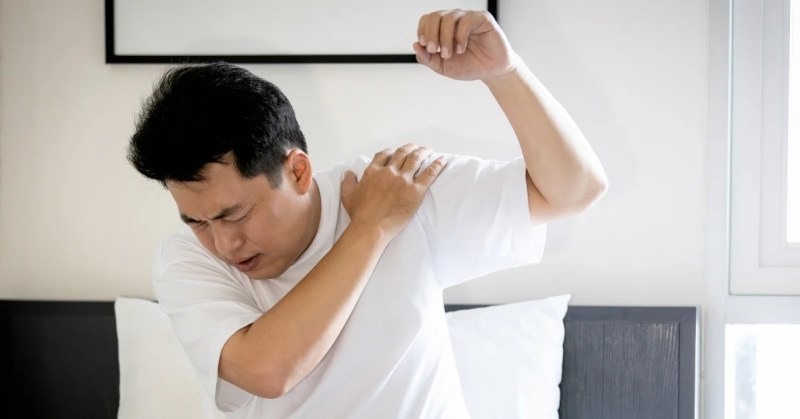
Signs Your Rotator Cuff Needs Attention Before It Gets Worse
Rotator cuff problems often creep up slowly. You may not remember one big injury that started it all.
Common shoulder warning signs include:
- Pain when you reach overhead, out to the side, or behind your back
- Pain with lifting, especially presses and overhead movements
- Night pain when you lie on that shoulder
- Weakness or fatigue with repeated reps
- A catching, clicking, or sticking feeling in the joint
At first, you may call it a nagging shoulder. Over time, that nagging pain starts to change how you lift, throw, or move your arm.
Certain red flags mean you should get checked soon:
- Sudden sharp pain after a fall or heavy lift
- Inability to lift your arm above shoulder height
- Noticeable weakness that shows up from one workout to the next
Ignoring pain and forcing your way through often leads to more irritation and compensations. You may shift load into your neck, upper back, or elbow, which can create a chain of new issues.
Can A Torn Rotator Cuff Heal Without Surgery
For many people, the answer is yes, especially if you have a partial tear, tendon irritation, or an overuse injury. Your body constantly repairs and remodels tissue, and with the right loading, movement, and recovery, your rotator cuff can become stronger and more resilient.
Natural healing is most realistic when:
- You still have good strength, even if you feel pain
- You can move your arm, even if that motion is limited
- Your pain started gradually, not from one violent injury
Surgery may be considered when:
- There is a large, full thickness tear
- You have clear loss of strength, not just pain
- Your arm does not work well for daily tasks even after careful treatment
Physical therapy helps bridge the gap between rest and surgery. Through targeted exercises, hands on care, and smart progressions, you support normal healing and function instead of forcing the shoulder to grind through pain. In this approach, you give the tissue the right stress at the right time so it has a chance to recover.
If your shoulder pain keeps slowing you down, you do not have to figure it out alone. At iCare Physical Therapy & Wellness, we would love to talk through your story, your goals, and your options.
Ask questions, share what you want to get back to, and see whether a natural, movement based plan fits what you need. It is a low pressure way to gain clarity and a direction forward.
To schedule an appointment or find out more, contact iCare Physical Therapy & Wellness at 404 905 7342. Together, we can help your shoulder heal, keep you active, and support the lifestyle that makes you feel most like yourself.
Phase 1: Calming Pain And Protecting Your Shoulder Without Total Rest
The first goal is simple. You want to calm pain without shutting down your entire active life.
Total rest usually is not the answer for rotator cuff issues. Your shoulder needs movement to keep blood flowing, joint surfaces healthy, and muscles engaged.
Relative rest is a better strategy and might look like this:
- Reducing or pausing heavy overhead lifts for a short time
- Swapping barbells for lighter dumbbells or cables
- Cutting back on high volume throwing or serving
- Changing your grip or range of motion during lifts
For pain relief, simple tools help:
- Ice after hard use or if the shoulder feels hot and irritated
- Heat before exercise to ease stiffness
- Gentle, pain free movements several times a day to prevent stiffness
During this phase, you listen closely to your shoulder. Sharp, catching, or pinching pain is a sign to back off that motion or load, while mild soreness that settles quickly is more normal as the tissue wakes up.
Phase 2: Restoring Mobility And Healthy Shoulder Mechanics
Once pain starts to settle, your focus shifts toward how the shoulder moves. Tightness and poor mechanics can keep irritating the cuff, even when the tear itself begins to heal.
Good shoulder function depends on more than one joint. Your shoulder blade, upper back, neck, and ribcage all play a role in how your arm moves overhead or out to the side.
Common mobility goals at this stage include:
- Comfortable overhead reach without pinching
- Easy reach behind your back for dressing or reaching into the car
- Smooth rotation at the shoulder without your whole body twisting to help
Gentle mobility exercises often used in rehab include:
- Pendulum swings, where your arm hangs and moves with help from your body
- Wall or table slides that support your arm while you glide it upward
- Assisted range of motion using a dowel or your other arm for support
Posture and shoulder blade control matter a lot here. When your shoulder blade moves well on your ribcage, your rotator cuff does not need to fight for every inch of motion.
Phase 3: Building Strength Safely Around A Torn Rotator Cuff
Strength is where true natural healing takes hold. A stronger shoulder complex protects healing tissue and supports the demands of your sport or training.
You do not jump straight back into heavy pressing. Instead, you build from the inside out, with control and intention.
Key strength targets include:
- The rotator cuff muscles for stability
- Shoulder blade muscles such as the middle and lower trapezius
- The serratus anterior to help the shoulder blade glide
- Core and hip muscles to support whole body movement
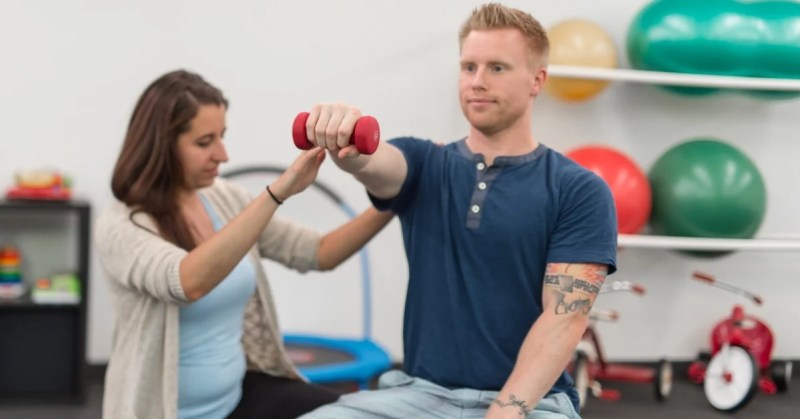
Early strength work might include:
- Isometric holds where you push gently into a band or wall without moving
- Very light band work in pain free ranges
- Closed chain drills such as weight bearing through the arm on a table or wall
As your shoulder tolerates more, you slowly increase load, range of motion, and eventually speed or power. Mild muscle fatigue is expected, while growing strength with decreasing pain is a good sign that you are loading the tissue in a healthy way.
Staying Active While You Heal: Sport And Gym Friendly Modifications
There is usually no need to park yourself on the couch while your rotator cuff heals. Most active adults do better when they stay in motion, as long as they respect limits.
The goal is to protect the injured tissue while you keep your fitness, routine, and mental health. Thoughtful modifications help you do that.
In the gym, that might look like:
- Emphasizing lower body strength such as squats, deadlifts, lunges, and hip thrusts
- Swapping heavy barbell bench for push ups on an incline or lighter dumbbell floor press
- Using neutral grips on dumbbells or bars to reduce strain on the front of the shoulder
- Choosing landmine style presses or cable work instead of strict overhead barbell presses
For sport specific training, you can:
- Reduce serving or throwing volume and add more rest between sets
- Work on footwork, conditioning, and strategy drills that spare the shoulder
- Cross train with cycling, walking, hiking, or low impact cardio options
The key is to find a middle ground where you stay active and engaged, but your shoulder does not flare for hours afterward. Over time, you expand what you can do with comfort and consistency.
Natural Support: Lifestyle Habits That Help Your Shoulder Heal
Your rotator cuff does not heal in isolation. Daily habits either support healing or slow it down.
Sleep is one of the most powerful helpers. Your body does much of its repair work at night, so quality sleep can act as strong natural therapy.
Helpful sleep tips for a sore shoulder include:
- Avoid lying directly on the painful side
- Use a pillow in front of your body and rest your arm on it
- If you lie on your back, support your arm with a small pillow under the elbow
Nutrition also matters more than many people realize. Your tissues do better when they have the building blocks they need to repair.
Simple nutrition themes that support healing include:
- Aim for enough protein spaced through the day
- Stay hydrated, especially if you sweat a lot in training
- Focus on mostly whole foods rather than ultra processed options
Stress can also influence how your brain processes pain. When you feel tense and overloaded, your muscles often follow.
Supportive habits might include:
- Short walks to decompress during the day
- Easy breathing drills to relax your neck and shoulders
- Light mobility sessions on off days instead of full inactivity
Consistent, small actions add up over time. They help your shoulder calm down, your energy stay steady, and your mind feel more in control of the process.
When To See A Physical Therapist Or Doctor
You can do a lot on your own with good information and patience. Still, some situations call for an expert set of eyes.
It makes sense to see a physical therapist if:
- Your shoulder pain does not improve after several weeks of careful rest and exercise
- You keep flaring it up every time you try to return to sport
- You feel unsure which exercises are safe for your specific tear
An evaluation often includes:
- A detailed history of your training, work, and symptoms
- Tests of your range of motion and strength
- Assessment of posture, shoulder blade control, and overall movement patterns
A doctor or orthopedic specialist may be helpful when:
- You have sudden, intense pain after a trauma
- You cannot lift your arm for basic daily tasks
- Your shoulder keeps giving out or feels unstable
Seeking help is not a failure. It is a smart way to match your rehab plan to your goals, especially if you want to lift, run, or play your sport for many years to come.
How iCare Physical Therapy & Wellness Supports Natural Rotator Cuff Healing
One On One Care That Focuses On Your Goals
When your shoulder hurts, you do not just want a label or a diagnosis. You want a clear, personal plan that fits your sport, your job, and your life.
At iCare Physical Therapy & Wellness, we work with you one on one so you feel heard, supported, and guided every step. We look at how you lift, throw, reach, and move so your plan lines up with what you actually do in a normal week.
We do not just chase pain. We focus on restoring confident, pain free movement so you can return to the gym, the court, the trail, or the field without constantly worrying about your shoulder.
A Holistic Plan To Keep You Moving, Not Sideline You
If you are an active adult, weekend warrior, or recreational athlete, you probably do not want to stop training. At iCare, we understand that, and we help you stay as active as possible while your rotator cuff heals naturally.
Your plan can include:
- Hands on techniques to calm pain and improve mobility
- Targeted exercises that build cuff and shoulder blade strength
- Adjustments to lifts and workouts so you keep training safely
- Guidance on posture, daily habits, and recovery strategies
We look at your whole body, not just your shoulder. By addressing mobility, strength balance, and movement patterns, we support both short term relief and long term shoulder health.
From Pain Relief To Long Term Shoulder Performance
Your end goal is not just less pain. You want to press, swing, throw, carry, and train with confidence again.
We help you move from early pain control and protection into progressive strength and performance work that fits your age, sport, and goals. You learn what your shoulder can handle, how to warm up well, and how to train in a way that protects your rotator cuff in the future.
For many people in the Sandy Springs and greater Atlanta area, that can mean:
- Returning to lifting without fear of every rep
- Getting back to tennis, pickleball, golf, or swimming
- Staying strong and independent as you age
- Managing chronic shoulder pain with a natural, sustainable approach
The aim is simple. We help you trust your shoulder again, not just tolerate it.
Ready To Take The Next Step
If your shoulder pain keeps slowing you down, you do not have to figure it out alone. At iCare Physical Therapy & Wellness, we would love to talk through your story, your goals, and your options.
Ask questions, share what you want to get back to, and see whether a natural, movement based plan fits what you need. It is a low pressure way to gain clarity and a direction forward.
To schedule an appointment or find out more, contact iCare Physical Therapy & Wellness at 404 905 7342. Together, we can help your shoulder heal, keep you active, and support the lifestyle that makes you feel most like yourself.


