

Your middle back works hard every single day, whether you are lifting weights, chasing your kids, playing pickleball, or sitting at a desk. When it feels tight or achy, the right middle back stretches can ease pain, restore motion, and help you stay active without relying on constant medication.
As a sports physical therapist, I look at your middle back as a key hub for movement. It supports your posture, helps you rotate for sports, and even affects how well you breathe during a workout or a walk.
When this area stiffens up, your neck, shoulders, and low back often start to complain too. You might notice a dull ache between your shoulder blades, trouble taking a deep breath, or a feeling that your upper back will not unlock.
The good news is that targeted, safe stretching can make a real difference. With a few simple movements done consistently, you can improve mobility, reduce nagging pain, and protect your body during both everyday tasks and weekend workouts.
In this blog, we will walk through why your middle back matters so much for performance and comfort. You will also learn specific stretches and practical tips you can use right away to move with more freedom and confidence.
Understanding Middle Back Pain In Active Adults And Athletes
What And Where Is The Middle Back
When we talk about your middle back, we mean your thoracic spine and the muscles that support it. This area runs from the base of your neck down to the bottom of your ribcage.
Your ribs attach here, so your middle back helps you breathe, twist, and stay upright. It also connects your neck, shoulders, and low back, which makes it a key player for almost every movement you make.
For overhead athletes, lifters, and weekend warriors, this region acts like a spring. It absorbs and transfers force between your hips and your shoulders, and if it stiffens up, other areas start to work overtime.

Common Causes Of Middle Back Tightness And Pain
Middle back pain does not only show up after a big workout. It often builds up slowly from daily habits.
Some of the most common causes include:
• Long hours sitting at a desk, in the car, or on the couch
• Working on a laptop that sits too low or too far away
• Repetitive sports that involve rotation, like tennis, golf, and pickleball
• Heavy lifting in the gym with poor form or weak support muscles
• Breathing shallow and high in the chest instead of using your ribs and diaphragm
• Age related stiffness that limits how much your spine and ribs move
When your middle back does not move well, your body cheats. Your neck, shoulders, and low back pick up the slack, which often leads to new aches in those areas.
Signs Your Middle Back Needs More Attention
Your body gives you clues when your thoracic spine is struggling. You may feel it during workouts, at your desk, or even while you try to relax.
Common signs include:
• A dull ache or burning between your shoulder blades
• A locked up feeling when you try to twist your torso
• Trouble taking a full, deep breath without tightness
• Stiffness after sitting that eases once you move but keeps coming back
• Discomfort with overhead movements like pressing, serving, or swimming
• Middle back fatigue when you try to sit or stand tall for more than a few minutes
If these issues keep returning no matter how much you stretch, your body probably needs a more complete plan. Simple stretching helps, but it is only part of the solution.
If your middle back keeps slowing you down, you do not have to figure it out alone. We are here to guide you with clear education, practical tools, and a plan that fits your real life.
Get in touch with us, share what you are dealing with, and see if sports physical therapy is the right fit for you.
To get started, call us today at 404 905 7342 and take the first step toward freer, stronger, and more comfortable movement.
The Benefits Of Middle Back Stretches For Performance And Everyday Life
Better Posture, Less Stress On Your Neck And Low Back
Your middle back controls how well you stack your ribs over your pelvis. When it moves well, good posture feels more natural and less forced.
If your thoracic spine stays rounded and stiff, your head often shifts forward and your lower back arches more to keep you upright. That extra stress shows up as neck tension or low back pain.
Middle back stretches help you:
• Open the front of your chest
• Free up the joints between your vertebrae and ribs
• Support a tall, relaxed posture instead of a rigid stance
Improved Sports Performance And Recovery
Rotational and overhead sports depend on a mobile middle back. When this area moves well, your shoulders and hips do not have to twist beyond their limits.
If your middle back stays stuck, your body still finds a way to swing, serve, or throw, but the wrong joints pay the price.
Better middle back mobility can:
• Add power to your golf swing, tennis serve, or baseball throw
• Help you rotate more smoothly when you run, cut, or change direction
• Reduce strain on your shoulders and low back during heavy lifts
• Support quicker recovery after intense training or games
Easier Breathing, Better Energy
Your ribs wrap around your lungs and attach to your thoracic spine. When the middle back is stiff, your ribcage cannot expand fully.
You may notice shallow breathing, tightness across your chest, or fatigue during cardio that does not match your fitness level.
Improved middle back mobility and stretching can:
• Allow your ribs to move better with each breath
• Help you use your diaphragm more effectively
• Support more efficient breathing during runs, rides, and workouts
• Boost your sense of energy and calm during the day
Confidence In Movement At Any Age
Whether you are in your thirties or your seventies, your middle back plays a big role in how steady and capable you feel. It helps you reach overhead, twist to check your blind spot, and turn to talk to someone behind you.
For seniors, stiffness in this region can lead to a hunched posture and less confidence with balance. For younger adults, it can show up as early pain that limits training and daily activity.
Middle back stretches support:
• Safer reaching, lifting, and carrying
• Better balance by keeping your trunk centered
• A more open, upright posture that feels strong instead of rigid
Safe, Effective Middle Back Stretches You Can Start Today
Warm Up First: Gentle Mobility Before Deep Stretching
Your spine and muscles respond best to a gentle warm up before you ask them to move more. Think of it as waking up the system.
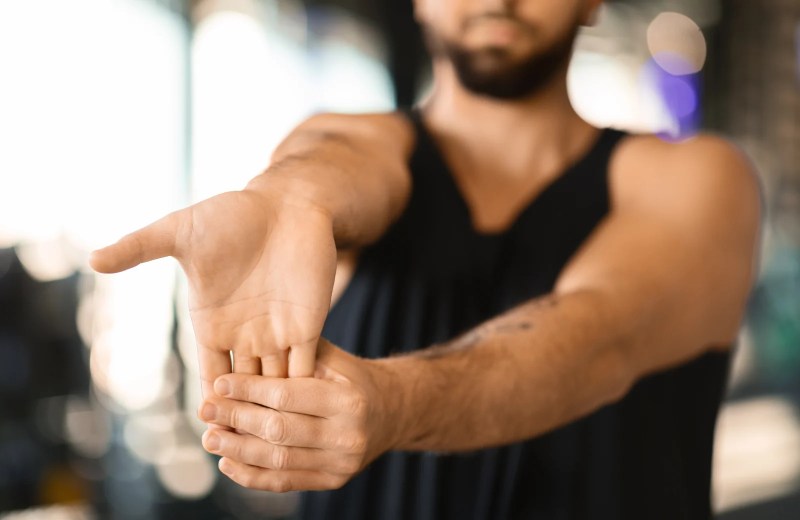
Good options include:
• A short walk around your home, office, or block
• Gentle arm circles or shoulder rolls
• Easy cat cow movements on your hands and knees
• A few slow, pain free trunk rotations in standing or sitting
If you deal with chronic pain or you are older, keep the warm up light. You want your body to feel ready, not exhausted.
Seated Thoracic Rotation Stretch
This is a great desk stretch you can do almost anywhere. It helps you unlock rotation in your middle back without needing to get down on the floor.
Try this version:
• Sit tall near the edge of a chair with your feet flat on the floor
• Cross your arms over your chest or lightly hold the back of your shoulders
• Gently rotate your torso to one side, keeping your hips facing forward
• Pause, breathe into the stretch, then return to center and repeat on the other side
Move slowly and keep the motion in your middle back, not your low back. Aim for smooth, easy turns instead of forcing a big twist.
Child’s Pose With Side Reach
This stretch targets your middle back, lats, and the muscles along your sides. It works well for lifters, swimmers, and anyone who feels tight under the shoulder blades.
Here is a simple way to do it:
• Start on your hands and knees, then sit your hips back toward your heels
• Walk your hands forward until you feel a gentle stretch through your arms and back
• From this position, walk both hands to the right and let your hips sink back
• Breathe into the stretch along the left side of your ribcage and middle back
• Return to center, then walk your hands to the left to stretch the right side
Stay relaxed through your neck and jaw. You should feel a comfortable pull, not sharp or pinching pain.
Thread The Needle Stretch
Thread The Needle is a favorite for loosening the area between the shoulder blades and improving rotation. Golfers, tennis players, and anyone who swings or throws can benefit from it.
To perform Thread The Needle:
• Start on your hands and knees with your hands under your shoulders and knees under your hips
• Slide your right arm under your left arm, palm facing up, and let your right shoulder and the side of your head rest lightly on the floor
• Let your chest gently rotate toward the floor until you feel a stretch in your middle back
• Hold for a few breaths, then return to the starting position and switch sides
Keep your hips stacked over your knees and avoid collapsing into your low back. Let your breath deepen as you hold the stretch so your body can relax into the movement.
Wall Angels Or Wall Slides
Wall Angels help you open your chest and engage the muscles that support your shoulder blades and middle back. They are great for posture and shoulder health.
Here is how to try them:
• Stand with your back against a wall, feet a few inches away from the base
• Gently press the back of your head, upper back, and hips toward the wall
• Place your arms in a goalpost position with elbows bent to ninety degrees and the backs of your hands toward the wall
• Slowly slide your arms up the wall as high as you can without pain, then return to the starting position
If your hands or elbows do not fully touch the wall at first, that is okay. Work within your current range and focus on smooth, controlled movement.
Foam Roller Thoracic Extension
Foam rolling the upper back can help open stiff joints and prepare you for stretching. It is best for people with healthy bone density and no acute spinal injuries.
To use a foam roller safely:
• Sit on the floor and place the roller across your mat behind you at about middle back level
• Lean back so the roller sits under your upper back, then support your head with your hands
• Gently extend your upper back over the roller while keeping your ribs softly engaged
• Roll a small distance up and down the middle back, or pause in one spot and breathe
Skip this technique if you have osteoporosis, a recent fracture, or if it increases your pain. In that case, stick with gentler floor or seated stretches that feel safe and controlled.
How To Build A Middle Back Stretch Routine That Actually Sticks
How Often Should You Stretch Your Middle Back
Consistency matters more than intensity. A few minutes a day usually beats one long session once a week.
General guidelines that work for many active adults include:
• Daily light mobility moves, especially if you sit a lot
• Deeper stretches three to five times per week
• Short sessions before and after workouts that demand rotation or overhead use
If you struggle with chronic pain, you may do better with shorter, more frequent sessions. The goal is to nudge your body, not fight it.
Pairing Stretches With Strength: The Missing Piece
Stretching creates new range of motion, but strength helps you own it. Without strength, your body often slips back into old patterns.
You can support your middle back by adding simple strength work, such as:
• Rows with bands, cables, or dumbbells
• Shoulder blade squeezes while standing or lying face down
• Core exercises that resist rotation, like dead bugs or side planks
• Light Y, T, and W arm raises on a bench or exercise ball
When you combine stretching with strength, you give your joints both freedom and support. That combination protects you in everyday life and in sport.
When To Stop And When To See A Sports Physical Therapist
Stretches should feel productive, not scary. Mild back tension or a gentle pull is normal, but sharp or worsening pain is not.
Stop a stretch and ease off if you notice:
• Sharp, stabbing, or electric pain
• Numbness, tingling, or burning that travels down an arm or into the chest
• Dizziness, shortness of breath, or a feeling of pressure you cannot explain
• Pain that lingers or worsens after you finish
If your middle back pain does not improve, keeps returning, or affects your sleep, sports, or daily tasks, it deserves a closer look.
A one on one evaluation with a Doctor of Physical Therapy can help you understand what is really going on and what your body needs beyond stretching.
How Icare Physical Therapy & Wellness Supports Pain Free, Active Living
Staying Active With One On One Sports Physical Therapy
You deserve more than a quick check and a generic handout. At iCare Physical Therapy & Wellness, we provide one on one sports physical therapy that focuses on your goals, your sport, and your lifestyle.
We look at how your middle back, hips, shoulders, and core all work together so you can move well, not just stretch one tight spot. That approach helps you return to the activities you love with more confidence and less fear of tweaking something again.
Holistic Care For Chronic Pain And Aging Athletes
If you deal with chronic pain, you know that one single stretch or exercise rarely fixes everything. We use a holistic approach that blends hands on treatment, targeted mobility, strength training, and habit coaching.
For active older adults and seniors, we focus on balance, posture, and safe mobility so you feel steady when you walk, climb stairs, or reach overhead.
You stay in charge of your life, not your pain.
Supporting The Sandy Springs And Metro Atlanta Community
We are proud to serve Sandy Springs and the greater Atlanta area with care that feels personal and grounded. You are not just a number on a schedule, your story and your goals matter.
Whether you are a weekend warrior, a busy parent, a desk bound professional, or a retiree who wants to stay independent, we help you build a body that supports the life you want.
Ready To Take The Next Step?
If your middle back keeps slowing you down, you do not have to figure it out alone. We are here to guide you with clear education, practical tools, and a plan that fits your real life.
Get in touch with us, share what you are dealing with, and see if sports physical therapy is the right fit for you.
To get started, call us today at 404 905 7342 and take the first step toward freer, stronger, and more comfortable movement.


