

Tennis elbow exercises that focus on slow, loaded wrist and forearm movements are the most proven way to calm the pain and rebuild grip strength. The star of the show is a gentle eccentric routine like the Tyler Twist, paired with stretches and a steady, patient build.
You do not need a racquet to get tennis elbow, and you do not need surgery to beat it. We help active adults and athletes across Sandy Springs turn nagging outer elbow pain into a full comeback.
The good news is strong. The American Academy of Orthopaedic Surgeons reports on its OrthoInfo patient resource that roughly 80 to 95 percent of people with tennis elbow recover with nonsurgical care. The right exercises, done consistently, are the heart of that success.
Do This Today For Your Tennis Elbow
- Ease off the gripping and lifting tasks that spike your pain for a couple of weeks.
- Start gentle wrist extensor stretches, holding each for 15 to 30 seconds.
- Add slow eccentric wrist curls with a light weight once sharp pain settles.
- Ice the outer elbow for 15 minutes after activity if it flares.
- Book an evaluation if the pain lingers past a few weeks or keeps returning.
What Are The Best Tennis Elbow Exercises?
The best tennis elbow exercises combine eccentric strengthening, wrist extensor stretches, and grip work built up over time. Eccentric loading, which means slowly lowering a weight, is the piece with the strongest track record for this injury.
Consistency beats intensity here. A short routine done daily works far better than an occasional hard session that leaves you sore.
The table below compares the core moves so you can see what each one targets.
| Exercise | What You Do | Main Focus | How Often |
|---|---|---|---|
| Eccentric wrist extension | Lower a light weight slowly with palm facing down | Tendon strength and healing | Daily, 3 sets of 15 |
| Tyler Twist | Twist a flexible bar to load the wrist extensors | Targeted eccentric loading | Once daily, 3 sets of 15 |
| Wrist extensor stretch | Straighten the elbow and gently bend the wrist down | Flexibility and pain relief | Several times a day |
| Grip strengthening | Squeeze a soft ball or putty | Grip and endurance | Every other day |
Why Eccentric Loading Works So Well
Eccentric loading works because it gently stresses the tendon in a way that stimulates healing and rebuilds strength. The damaged tendon needs a controlled load to reorganize and get stronger, not complete rest.
That is why slow lowering is the key. You control the weight on the way down, which is where the healing signal is strongest.
What Causes Tennis Elbow In The First Place?

Tennis elbow is caused by overuse of the forearm muscles and tendons that straighten your wrist, which leads to tiny tears on the outside of the elbow. The tendon most often involved attaches your forearm extensor muscles to the bony bump on the outer elbow.
It is more common than most people think. StatPearls, published by the National Institutes of Health, describes lateral epicondylitis as a frequent source of elbow pain that affects roughly 1 to 3 percent of adults each year.
Who Gets Tennis Elbow?
Tennis elbow reaches far beyond the tennis court. The AAOS notes that most people who develop it are between the ages of 30 and 50, and that many are not athletes at all.
- Painters, plumbers, and carpenters who use their forearms all day.
- Cooks, butchers, and auto workers who grip and lift repeatedly.
- Racquet sport players, especially with improper technique or gear.
- Anyone who ramps up gripping tasks faster than the tendon can adapt.
How To Tell Tennis Elbow From Other Elbow Pain
Tennis elbow usually causes pain and burning on the outer part of the elbow that worsens with gripping. The pain tends to build gradually over weeks rather than starting with one dramatic injury.
Weak grip strength is another classic clue. If shaking hands, turning a doorknob, or lifting a coffee mug stings the outer elbow, tennis elbow is a strong suspect.
How Do You Perform The Tyler Twist And Eccentric Exercises?
You perform the Tyler Twist by using a flexible rubber bar to load your wrist extensors slowly and with control. It is one of the most studied and effective tennis elbow exercises available.
Start light and prioritize smooth, slow motion over speed. A little discomfort in the tendon is normal, but sharp pain means you should reduce the load.
The Tyler Twist Step By Step
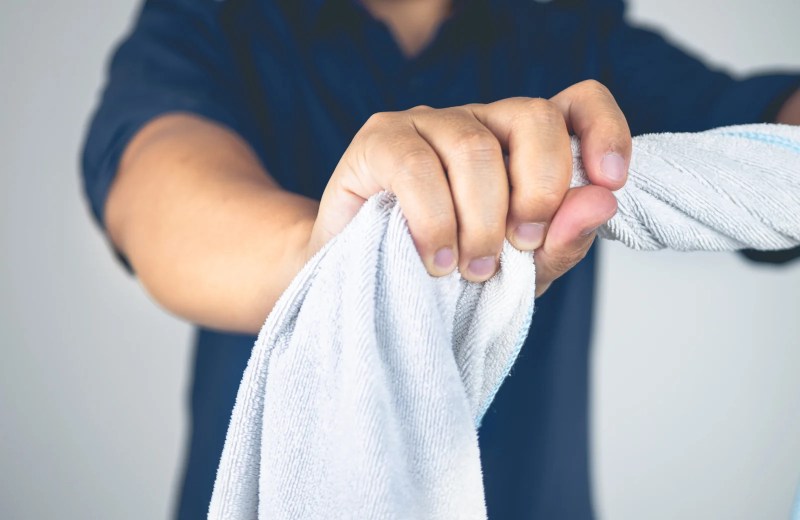
The Tyler Twist isolates the eccentric phase that helps the tendon heal. Here is the basic method.
- Hold the bar upright in the sore hand with your wrist bent back.
- Grab the top of the bar with your other hand and twist it.
- Extend your arms in front of you while holding the twist.
- Slowly untwist the bar using only the sore wrist, taking three to four seconds.
- Repeat for three sets of 15 once a day.
Eccentric Wrist Curls
Eccentric wrist curls give you a simple version using a light dumbbell. They build the same healing load with equipment you likely already own.
- Rest your forearm on a table with your palm facing down and hand off the edge.
- Use your other hand to help lift the weight up.
- Let go with the helping hand and lower the weight slowly on your own.
- Do three sets of 15, adding weight only as it gets easy.
Which Stretches Ease Tennis Elbow Pain?
Wrist extensor stretches ease tennis elbow pain by lengthening the tight, irritated tendons on the outside of the elbow. They pair perfectly with your strengthening work and feel good in the moment too.
Gentle is the rule. A stretch should feel like a mild pull, never a sharp or burning sensation.
The Wrist Extensor Stretch
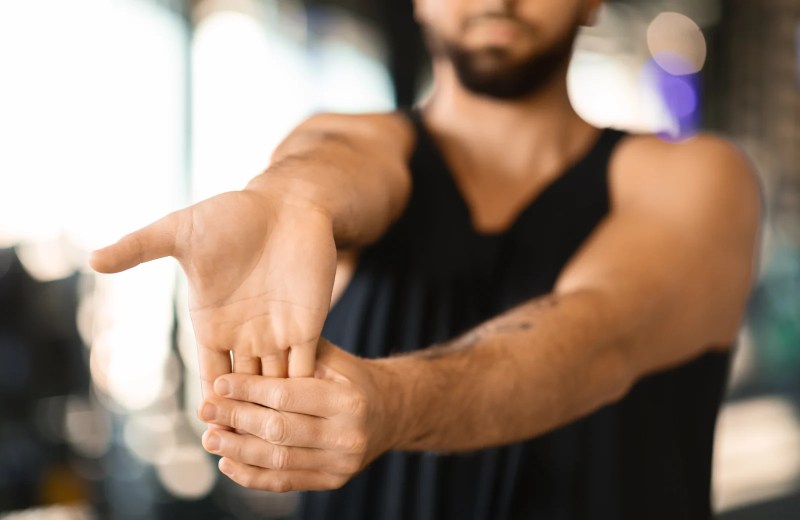
This stretch targets the exact tendons involved in tennis elbow. Straighten your sore arm out in front of you with the palm facing down.
Use your other hand to gently bend the wrist down and in until you feel a mild pull along the top of the forearm. Hold for 15 to 30 seconds and repeat a few times a day.
Forearm And Wrist Flexor Stretch
Balancing the forearm helps the whole system move better. Straighten your arm with the palm facing up, then gently pull the fingers back toward the floor.
Hold the mild stretch, breathe, and release. Doing both the top and bottom of the forearm keeps everything working together.
How Long Until Tennis Elbow Exercises Start Working?
Most people notice tennis elbow exercises starting to help within four to six weeks of consistent daily work. Full recovery often takes a few months, so patience and steady effort win the day.
The tendon heals slowly by nature. Stopping the moment you feel better is a common mistake that lets the pain creep back.
What A Realistic Timeline Looks Like
Progress usually comes in stages rather than all at once. Here is a general sense of the arc.
- Weeks one to two: calm the flare and start gentle stretches.
- Weeks three to six: build eccentric strength and notice early relief.
- Weeks six to twelve: grip and daily tasks feel more normal.
- Beyond twelve weeks: keep maintenance work to prevent a return.
When Should Exercises Be Paired With Hands-On Treatment?
Exercises should be paired with hands-on treatment when pain lingers, keeps returning, or limits your daily life despite your best home efforts. Skilled hands-on care can break a stubborn cycle that exercise alone has not.
For tendons that will not settle, we often add targeted techniques. Our dry needling in Sandy Springs can reduce muscle tension and support the healing of your exercises.
How Manual Therapy Supports Your Exercises
Manual therapy restores motion and eases pain so your exercises work better. Hands-on techniques improve how the tissue moves and glides, which makes your strengthening more comfortable and effective.
Our manual therapy services blend soft tissue work with a guided exercise plan. That combination is often what finally turns the corner on a stubborn elbow.
What Should You Avoid When You Have Tennis Elbow?
When you have tennis elbow, avoid pushing through sharp pain, gripping heavy loads, and going too hard too soon with your exercises. Those habits keep the tendon irritated and stall your recovery.
Rest does not mean doing nothing, though. It means backing off the aggravating tasks while you keep up gentle, healing movement.
Common Mistakes To Skip
A few missteps slow people down again and again. Steer clear of these.
- Doing exercises fast instead of slow and controlled.
- Adding weight before your form and comfort are solid.
- Quitting the routine the moment the pain fades.
- Ignoring pain that lasts longer than a few weeks.
How Do You Progress Tennis Elbow Exercises Safely?
You progress tennis elbow exercises safely by adding load only after your current level feels comfortable and controlled. Small, steady jumps protect the tendon and keep your momentum going.
Let comfort guide you rather than the calendar. If a level still stings, stay there another few days before you add weight or reps.
The Simple Rule For Adding Load
A good guide is mild discomfort that settles quickly, never sharp pain that lingers. Use these checkpoints as you build.
- Master slow form before you add any weight.
- Increase weight in small steps, not big leaps.
- Keep the lowering phase slow no matter the load.
- Back off a level if pain rises the next day.
Listening To Your Tendon
Your tendon gives you feedback every day if you pay attention. Morning stiffness that eases with movement is normal, while pain that grows through a session is a signal to ease up.
Tracking your pain on a simple scale helps you spot trends. When your everyday tasks stop flaring, you know the plan is working.
What Role Does Grip Strength Play In Recovery?
Grip strength plays a central role in tennis elbow recovery because the muscles that grip also control your wrist and elbow. Rebuilding grip helps the whole system share the load instead of overloading the sore tendon.
Weak grip is often both a symptom and a cause. As you rebuild it, daily tasks stop tugging on the injured area.
Gentle Grip Exercises To Try
Grip work should feel easy at first and build slowly. Start with these simple options.
- Squeeze a soft foam ball or therapy putty for short holds.
- Spread your fingers against a rubber band looped around your fingertips.
- Carry a light bag for short distances to build endurance.
Do Braces And Ergonomic Changes Help Tennis Elbow?
Braces and ergonomic changes can support your tennis elbow exercises by reducing the daily strain that keeps the tendon irritated. They do not replace the exercises, but they make the healing environment friendlier.
A counterforce brace worn over the forearm can take pressure off the sore tendon during activity. Many people find it helps them stay active while they rehab.
Smart Changes At Work And Home
Small tweaks to how you grip and lift add up fast. Try these where they fit your routine.
- Use a lighter grip on tools, mugs, and bags.
- Keep your wrist in a neutral position during repetitive tasks.
- Take short breaks from long gripping jobs.
- Spread heavy loads across both arms when you can.
Frequently Asked Questions About Tennis Elbow Exercises
What is the fastest way to cure tennis elbow?
There is no instant cure, but consistent eccentric exercises paired with rest from aggravating tasks give the fastest, most reliable results. Most people improve over several weeks when they stick with the plan.
Should you exercise with tennis elbow or rest it?
You should do gentle, targeted exercises rather than complete rest, because the tendon needs controlled load to heal. Full rest can actually leave the tendon weaker and slower to recover.
Is the Tyler Twist good for tennis elbow?
Yes, the Tyler Twist is one of the most effective exercises for tennis elbow because it delivers focused eccentric loading. It is simple to do at home with an inexpensive flexible bar.
Can tennis elbow heal without surgery?
Yes, the large majority of tennis elbow cases resolve with nonsurgical care like exercise, stretching, and hands-on treatment. Surgery is only considered after many months of unsuccessful conservative care.
How often should you do tennis elbow exercises?
Most eccentric routines are done once or twice a day, with three sets of about 15 repetitions. Daily consistency matters more than heavy loads or long sessions.
Why does my tennis elbow keep coming back?
Tennis elbow tends to return when people stop their exercises too soon or jump back into heavy gripping before the tendon is ready. Ongoing maintenance work and smart activity changes help keep it away.
Ready To Put The Pain Behind You?
You should be able to grip, lift, and play without that outer elbow ache stopping you. We build a plan that gets you there and keeps you there.
Start With A Free Discovery Visit
We offer a free Discovery Visit so you can meet our team, talk through your elbow, and see how we can help before you decide anything. It is a relaxed, pressure-free first step.
Talk To Our Sandy Springs Team Today
Call us at 404.905.7342 or reach out through our contact page to book your visit. You move. We guide. Let us help you get back to pain-free movement with care built around you.


