

Effective shin splints treatment starts with three things. Back off the activity that hurts. Calm the tissue along your inner shinbone. Then rebuild the calf and hip strength that lets you absorb impact again. Rest alone rarely holds. The pain fades, you return to the same mileage on the same shoes, and the ache comes right back.
That cycle is the reason so many active adults in Sandy Springs end up frustrated. We see it constantly in runners, tennis players, and dancers. Most of them ramped up training faster than their legs could adapt.
The good news is that this is one of the most fixable overuse injuries we treat. It responds well to a clear plan and a patient return to load.
Key Takeaways
- Shin splints are an overuse irritation of the tissue along the inner edge of your shinbone, not a random cramp.
- Sudden jumps in mileage, intensity, or hills cause most cases.
- Pain that stays spread over several inches of bone points to shin splints, while pain in one small spot may signal a stress fracture.
- Calf, hip, and foot strength matter more than stretching for lasting relief.
- Return to running gradually, and only after you walk comfortably for 30 minutes.
Do This Today
- Swap your run for swimming, cycling, or the elliptical for a few days.
- Ice the sore area for 20 minutes, two or three times, with a towel between the pack and your skin.
- Check the tread and age of your training shoes.
- Press along your shin with one finger and note whether the tenderness spreads or sits in one spot.
- Start calf raises off a step, two sets of 15, if they do not sharpen the pain.
What Are Shin Splints, and Why Do They Keep Coming Back?
Shin splints go by another name clinically: medial tibial stress syndrome. The pain sits along the inner border of the tibia, where muscle and connective tissue attach to bone. The American Academy of Orthopaedic Surgeons covers this on its OrthoInfo shin splints page. The condition involves inflammation of the muscles, tendons, and bone tissue around the tibia. Runners carry the highest risk of all athletes.
The pain is a load problem. Your bone and the attached tissue can handle a lot. They also adapt slowly, and training usually climbs faster than tolerance.
The Load Mismatch That Starts It
Most cases trace back to a sudden change. That might be adding two runs a week. It might be hill repeats after months of flat greenway miles.
Your calf and foot muscles fatigue first. Once they stop absorbing impact well, more force travels straight into the tibia.
Why It Returns After You Rest
Rest calms the irritation but changes nothing about why it started. Your calves are no stronger, your hips still drop with every stride, and your shoes are still worn flat.
So the tissue heals, you resume the same load, and the same overload repeats. Breaking that loop is the entire point of a real rehabilitation plan.
Who Tends to Get It
The National Library of Medicine StatPearls review puts the incidence in runners at 13.6 percent to 20 percent. Among military recruits, it reaches 35 percent to 56 percent. The same review lists common risk factors. Those include flat feet, limited ankle mobility, prior shin pain, and restricted hip rotation.
Those last two matter more than most people expect. Stiff ankles and weak hips push extra stress down into the shin with every step.
How Do You Know It Is Shin Splints and Not a Stress Fracture?
The clearest clue is how the tenderness spreads. Shin splints produce a diffuse ache across several inches of the inner shin. A tibial stress fracture creates sharp pain in one small spot you can cover with a fingertip.
That distinction changes everything about your plan. One needs load management, and the other needs medical imaging and real time off.
| Sign | Shin Splints | Tibial Stress Fracture | Compartment Syndrome |
|---|---|---|---|
| Pain location | Spread over more than 5 cm of inner shin | Pinpoint, under 5 cm | Deep and diffuse across the whole lower leg |
| Pain timing | Starts during activity, eases with rest | Persists at rest and at night | Builds during activity, fades quickly once you stop |
| Hopping on one leg | Uncomfortable but possible | Sharply painful, often impossible | Usually tolerable |
| Other symptoms | Mild swelling | Focal tenderness on bone | Numbness, tingling, tightness |
| Typical next step | Load management and strengthening | Imaging and protected rest | Compartment pressure testing |
Red Flags Worth a Same Week Visit
- Pain that wakes you at night or lingers hours after activity.
- A single tender point on the bone that hurts when you press it.
- Numbness, tingling, or a cold foot during exercise.
- Shin pain that has not improved after three weeks of reduced activity.
What Is the Fastest Shin Splints Treatment at Home?
The fastest relief comes from reducing impact for a short window while you keep moving in other ways. Complete rest is rarely necessary and often backfires, because deconditioned tissue tolerates even less load when you return.
Think of it as trading impact for effort. You keep your fitness, and your shin gets a break.
Swap, Do Not Stop
- Pool running, swimming, or aqua jogging keeps your aerobic base intact.
- Cycling and the elliptical load the legs without repeated ground impact.
- Rowing builds capacity while your shin settles.
Calm the Tissue
Ice for 20 minutes at a time, several times a day, with a barrier between the pack and your skin. Compression sleeves help some people manage swelling and soreness during the day.
Medications that reduce inflammation can take the edge off. They manage symptoms rather than fix the cause, so pair them with the strength work below.
Where Manual Therapy Fits
Hands on work along the calf, posterior tibialis, and soleus often reduces the pull on the shin quickly. We combine that with dry needling when a muscle stays guarded and will not release with stretching alone.
That relief opens a window. You use it to train the tissue, not just to feel better for an afternoon.
Which Exercises Help Shin Splints Heal?

Strength work beats stretching for this injury. The StatPearls review notes little benefit from passive stretching or generic lower leg braces. Progressive loading and gait changes hold up better in research.
The goal is a calf and foot that absorb force so your tibia does not have to.
Weeks One and Two
- Seated calf raises, three sets of 15, both legs.
- Toe taps against a wall for the front of the shin, two sets of 20.
- Side lying hip abduction, three sets of 12 each side.
- Short foot exercise to wake up the arch, five holds of 10 seconds.
Weeks Three and Four
- Standing calf raises off a step with a slow lower, three sets of 12.
- Single leg balance with small reaches, three sets of 30 seconds.
- Step downs from a low box, three sets of 10 each leg.
- Bent knee calf raises to target the soleus, three sets of 12.
Weeks Five and Beyond
- Loaded single leg calf raises, working toward 25 clean repetitions.
- Pogo hops in place, starting with three sets of 20 seconds.
- Split squats and single leg deadlifts for hip control.
- Skipping and low level plyometrics before you resume running volume.
Stop any movement that sharpens shin pain during or after the session. Mild muscle soreness is fine, and shin pain that climbs is a signal to back down a level.
How Long Does Shin Splints Treatment Take?
Most people feel meaningfully better within two to four weeks and return to full training in six to eight weeks. Cases that have simmered for months take longer, and stress fractures push the timeline out further.
| Phase | Typical Timeline | What You Focus On | What Success Looks Like |
|---|---|---|---|
| Calm it down | Days 1 to 10 | Reduce impact, ice, gentle calf work | Walking without pain |
| Build tolerance | Weeks 2 to 4 | Progressive calf, hip, and foot strength | Pain free stair climbing and 30 minute walks |
| Reintroduce impact | Weeks 4 to 6 | Hops, skips, short run walk intervals | Two consecutive days with no shin pain |
| Return to training | Weeks 6 to 10 | Gradual mileage, then speed | Prior mileage with no flare |
The Two Week Rule
The American Academy of Orthopaedic Surgeons advises being pain free for at least two weeks before you return to exercise. Come back at lower frequency, duration, and intensity than before the injury. That guidance saves more comebacks than any single exercise.
Do Shoes and Orthotics Really Matter?
They matter, though not as much as marketing suggests. Footwear is one variable among several, and it is the easiest one to change today.
What to Look For
- Shoes matched to your foot shape and your sport, not just your favorite color.
- Replacement when the midsole feels flat or the tread wears unevenly.
- Court shoes for court sports, and running shoes for road miles.
The Case for Arch Support
The StatPearls review points to prefabricated foot orthotics reducing shin splint cases in naval recruits. It also cites arch support inserts producing faster recovery and lower pain scores than sham inserts. If you have flat feet or a history of repeat shin pain, an insert is worth trying.
We fit these as part of a plan rather than as a standalone fix. An insert changes how force arrives at your leg, and strength changes what your leg does with it.
How Do You Return to Running Without Flaring It Up Again?

Return gradually, using time rather than distance at first. Add roughly 10 percent per week once you run consistently. Rushing this stage is the single most common reason shin splints come back.
A Simple Progression
- Walk 30 minutes with no pain before you run at all.
- Week one: alternate 30 second easy jogs with walking, three days that week.
- Weeks two through five: extend the jog intervals, keeping a rest day between runs.
- After that: raise weekly distance by about 10 percent until you reach your prior level.
- Add speed work only once distance feels easy.
Change How You Run, Not Just How Much
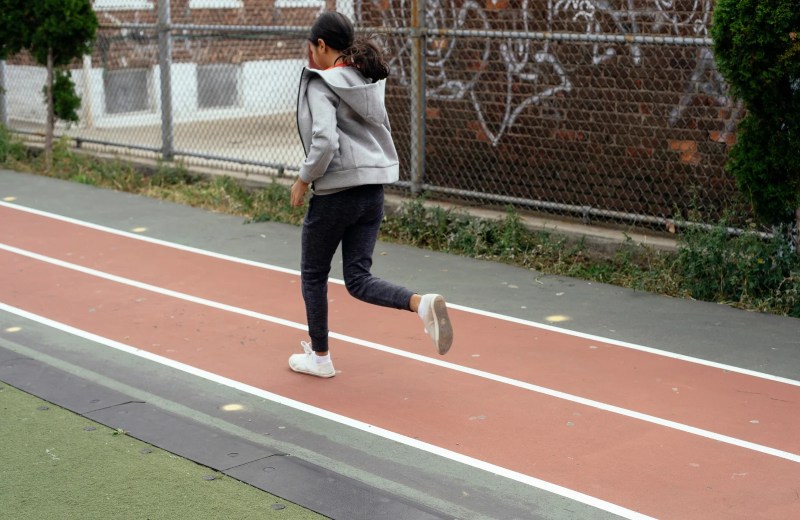
Gait retraining has real preventive value. The StatPearls review cites a study of army recruits. Gait retraining cut their risk of shin splints by 75 percent over 26 weeks.
Small changes carry the load here. A slightly quicker cadence helps. So does a softer landing and a foot that touches down closer to your body. We look at all of this during a running assessment for running injuries. The fix ends up specific to your stride.
When Should You See a Physical Therapist for Shin Splints?
Come in if the pain has lasted more than two weeks or keeps returning. Come in sooner if it stops you from training. Early guidance shortens the whole process.
What a First Visit Looks Like
- A hands on exam of your shin, calf, ankle, and hip.
- Screening to rule out a stress fracture or compartment issue.
- A look at your walking and running mechanics.
- A written plan with exercises, load targets, and a return date.
What Makes Treatment Stick
Consistency with a handful of exercises beats a long list you abandon in week two. We keep the program short, track your tolerance, and adjust as your shin gets stronger.
Our team treats these cases regularly through our running injury program in Sandy Springs, and the pattern is consistent. People who address strength and stride stay healthy, and people who only rest come back next season.
Frequently Asked Questions
Can you run through shin splints?
You can, but it usually makes the problem last longer. It also raises your risk of a tibial stress fracture. A short period of reduced impact almost always shortens the total time you spend injured. If you must keep training, cut volume sharply and stay off hills and hard surfaces.
How long do shin splints take to heal?
Mild cases settle in two to four weeks with load management and strengthening. Cases that have been building for months often take six to twelve weeks. The clock starts when you actually change the load, not when the pain first appeared.
Does stretching help shin splints?
Stretching may feel good in the moment, but evidence for it as a standalone treatment is weak. Progressive calf and hip strengthening produces more durable results. Use stretching as a warm up habit rather than as your main plan.
Should you ice or heat shin splints?
Ice works better for the sore, irritated phase, especially in the first week or two after a flare. Heat can help loosen tight calves before exercise later in recovery. Neither replaces reducing the load that caused the problem.
What is the difference between shin splints and a stress fracture?
Shin splints spread tenderness across several inches of the inner shin and ease with rest. A stress fracture concentrates pain in one small spot, often hurts at night, and typically requires imaging to confirm. If you can cover the painful area with one fingertip, get it checked.
Do compression sleeves fix shin splints?
Compression sleeves can reduce soreness and swelling while you exercise, and many runners find them comfortable. They do not correct the strength or mechanics behind the injury. Treat them as a comfort tool alongside real rehabilitation.
Getting Back to the Miles You Actually Enjoy
Shin pain is not a sign that your running days are over. It is feedback that your training outpaced your tissue, and that gap closes with the right plan.
We build that plan around your sport, your schedule, and your goals. Most of the active adults we see in Sandy Springs are back to full training within a couple of months.
How We Approach Your Recovery
We start with a thorough evaluation of your shin, ankle, hip, and stride. That tells us exactly what is driving the pain. Then we combine hands on treatment with a progressive loading program that fits your week.
Manual therapy, dry needling, and cupping help calm irritated tissue quickly. Strength work and gait coaching keep it calm once you return to training.
Care That Fits Active Adults
Our patients are people with races on the calendar, weekend leagues, and jobs that do not pause for rehabilitation. We build around that reality instead of asking you to shut everything down for a month.
You will always know what your next milestone is and what has to happen to reach it. That clarity is what keeps people consistent.
Ready to Stop Guessing About Your Shins?
Call us at 404 905 7342 to schedule an evaluation with our team in Sandy Springs. We will assess your shin and explain what is going on in plain language. Then we give you a plan you can start that week.
You can also reach us through our contact page and we will follow up to get you scheduled. Pain free movement is the goal, and we would like to help you get there.


