

Sprained ankle recovery works best when you move through three clear phases: settle the swelling, rebuild motion and strength, then retrain balance before you return to sport. Most mild sprains start to feel better within two to three days, yet a full recovery can take a couple of weeks for a minor sprain or up to three months for a severe one.
You do not have to guess your way through it. We guide active adults and athletes across Sandy Springs so a twisted ankle heals fully and does not turn into a weak spot you fight for years.
Ankle sprains are incredibly common. According to the National Institutes of Health StatPearls library, more than 2 million acute ankle sprains are treated in the United States every year. So if you rolled your ankle on a curb, a trail, or the basketball court, you are in good company, and you have a clear path back.
Do This Today For Your Sprained Ankle
- Rest the ankle and stop the activity that caused the pain right away.
- Ice for 20 minutes at a time, three or four times a day, with a towel between the ice and your skin.
- Wrap the ankle with a compression bandage and raise it above heart level when you sit.
- Put gentle weight through the foot as pain allows rather than staying completely still.
- Get it checked if you cannot bear weight or the swelling and pain do not ease within a few days.
What Is Sprained Ankle Recovery And How Long Does It Take?
Sprained ankle recovery is the process of healing the stretched or torn ligaments that stabilize your ankle, then rebuilding the strength and balance that keep it steady. A sprain happens when those strong bands of tissue get pushed past their limit, usually when the foot rolls inward.
Your timeline depends on the grade of the sprain. The American Academy of Orthopaedic Surgeons notes on its OrthoInfo patient resource that ankle sprains are the number one reason for missed participation in athletics. That same resource explains that a simple sprain may take just two weeks, while a more serious one may need six to twelve weeks or longer.
Here is a helpful truth. Feeling better and being fully healed are not the same thing. The pain often fades before the ligament and the balance system are ready for cutting, jumping, and sprinting.
Grade One, Grade Two, And Grade Three Sprains

Sprains fall into three grades based on how much the ligament tore. Knowing your grade helps set realistic expectations for your recovery.
- Grade one is a mild stretch with tiny tears. You feel mild tenderness and swelling and can usually walk on it.
- Grade two is a partial tear. You feel more pain, more swelling, and some looseness in the joint.
- Grade three is a complete tear. You feel significant pain and swelling, and the ankle feels unstable when you try to stand on it.
What Should You Do In The First 48 Hours After A Sprain?
In the first 48 hours, follow the rest, ice, compression, and elevation method to calm swelling and protect the ligaments. This early window sets the tone for how smoothly the rest of your recovery goes.
Rest does not mean total shutdown. Gentle weight through the foot as tolerated actually helps, and long stretches of complete stillness can leave the joint stiff. Think protected movement rather than the couch for a week.
How To Use Rest, Ice, Compression, And Elevation
Each part of this method has a job. Together, they keep swelling down so you can start rehab sooner.
- Rest: step back from running and sport, and let painful motions settle.
- Ice: apply for 20 minutes several times a day, never directly on bare skin.
- Compression: use an elastic wrap for support and to limit swelling.
- Elevation: prop the ankle above your heart, especially in the first two days.
When Should You See A Professional?
See a professional if you cannot put weight on the ankle, if the swelling is severe, or if pain lingers past a few days. Those signs can point to a more serious sprain or even a fracture that looks similar on the surface.
An early evaluation also protects your long-term function. The sooner we build the right plan, the lower your odds of a repeat sprain down the road.
What Are The Phases Of Sprained Ankle Recovery?
Sprained ankle recovery moves through three phases: protection and swelling control, motion and strength, and then balance and return to sport. Each phase has a goal, and skipping ahead is where most people get into trouble.
The table below lays out a general timeline. Your exact pace depends on your grade, your history, and how consistent you are with the work.
| Phase | Typical Timing | Main Goal | What You Work On |
|---|---|---|---|
| Phase One: Protect | Days 1 to 4 | Calm swelling and pain | Rest, ice, compression, elevation, gentle weight bearing |
| Phase Two: Restore | Days 4 to 21 | Rebuild motion and strength | Range of motion drills, resisted strengthening, controlled walking |
| Phase Three: Retrain | Week 3 and beyond | Return to sport safely | Balance work, agility, hopping, and sport-specific drills |
Phase One: Protect The Ankle
Phase one is about calming things down without shutting the joint down completely. You protect the ligaments, control swelling, and keep gentle motion alive.
This phase usually lasts a few days. Once the sharp pain and swelling start to ease, you are ready to progress.
Phase Two: Restore Motion And Strength
Phase two brings back your range of motion and starts rebuilding strength. You add ankle circles, alphabet tracing with your toes, and resisted band work.
Ending immobilization here matters. Staying stiff too long makes the joint cranky and slows your return to normal walking.
Phase Three: Retrain Balance And Return To Sport
Phase three restores balance and prepares you for the demands of your sport. This is the step most people skip, and it is the one that prevents the next sprain.
You progress from standing on one foot to hopping, cutting, and agility drills. When you can do these without pain or wobble, you are ready to return.
Which Exercises Help You Recover From A Sprained Ankle?
The best exercises for sprained ankle recovery restore motion first, then strength, then balance. You layer them in as pain allows rather than doing everything at once.
Start slow and build. If an exercise sharply increases pain or swelling, back off and give it another day.
Early Motion Exercises
Early motion keeps the joint from getting stiff while the ligaments heal. These are gentle and pain-free by design.
- Ankle pumps: point and flex the foot slowly.
- Ankle circles: trace slow circles in both directions.
- Alphabet tracing: write the letters of the alphabet with your big toe.
Strengthening Exercises
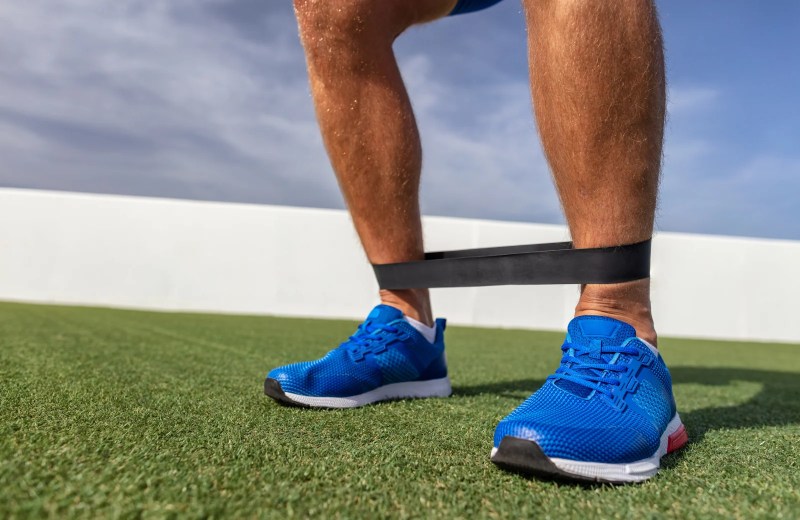
Strengthening rebuilds the muscles and tendons that steady the ankle. A simple resistance band is all you need to start.
- Band pushes in all four directions: in, out, up, and down.
- Heel raises: rise onto your toes and lower slowly.
- Towel scrunches: gather a towel with your toes to wake up the small foot muscles.
Balance And Proprioception Training

Balance training retrains the sense that tells your brain where your ankle is in space. The AAOS points out that poor balance often leads to repeat sprains, so this work is not optional.
- Single-leg stance: stand on the injured foot, then progress to closing your eyes.
- Balance board or cushion work: add an unstable surface as you improve.
- Figure eight walking: walk in progressively smaller figure eight patterns for agility.
How Do You Know If Your Ankle Sprain Is Serious?
Your ankle sprain may be serious if you cannot bear weight, the swelling is severe, or the joint feels unstable when you stand. These signs deserve a professional evaluation rather than a wait-and-see approach.
Most sprains are the outside, or lateral, type. The AAOS reports that around 90 percent of ankle sprains involve an inward roll that stresses the ligaments on the outside of the ankle. That pattern is common, but severity still ranges widely.
Signs You Should Get Evaluated
Some warning signs point to a sprain that needs more than home care. Watch for these.
- You cannot put weight on the foot or take more than a few steps.
- The ankle looks badly bruised or deformed.
- Pain and swelling do not improve after a few days of home care.
- The ankle keeps giving out under you.
Why Do Some Ankle Sprains Turn Into Chronic Instability?
Some sprains turn into chronic instability because the recovery stopped too early. When the ligaments and balance system do not fully heal, the ankle stays weak and rolls again more easily.
The AAOS names incomplete rehabilitation as the most common cause of chronic ankle instability after a sprain. In plain terms, people feel better, stop the exercises, and lose the strength and balance they needed to stay steady.
How To Prevent Repeat Sprains
You prevent repeat sprains by finishing your rehab and keeping up strength and balance work. A little maintenance goes a long way.
- Complete every phase, including the balance and agility work.
- Warm up before sport and activity.
- Choose supportive footwear for your activity.
- Keep doing single-leg balance drills even after you feel healed.
How Can Physical Therapy Speed Up Your Sprained Ankle Recovery?
Physical therapy speeds up sprained ankle recovery by matching the right exercises to the right phase and by catching problems before they become setbacks. You get a plan built for your ankle rather than a generic list from the internet.
Our team blends hands-on care with progressive exercise. If you want to see how we approach these injuries, our ankle sprain specialist program in Sandy Springs walks through what care looks like from your first visit.
Hands-On Care And Guided Progression
Hands-on care helps restore motion and ease pain while your ligaments heal. We pair that with a step-by-step plan, so you always know the next move.
We also test your balance and strength along the way. That way, you return to sport when your ankle is truly ready, not just when it stops hurting.
Care For Every Active Adult And Athlete
Whether you run the Sandy Springs trails or chase your kids around the yard, we tailor recovery to your goals. Our broader foot and ankle physical therapy services cover sprains, chronic instability, and the nagging aches that follow an old injury.
Does Your Sprained Ankle Recovery Change With Age Or Activity Level?
Your recovery timeline can shift with your age, your fitness, and how you use your ankle every day. A weekend runner and a busy parent may heal the same grade of sprain at slightly different speeds.
Older ankles and previously injured ankles often need extra time on balance and strength. That is not a setback; it is simply the honest starting point we build from.
Recovery For Weekend Warriors
Weekend warriors tend to jump back in the moment the pain fades. We slow that urge just enough to protect you, then rebuild the agility your sports demand.
The payoff is fewer flare-ups and a body that holds up on Saturday mornings. A steady return beats a rushed one every single time.
Recovery For Everyday Movers
If your goal is simply walking the neighborhood without worry, your plan looks a little different. We focus on confident, stable steps and the strength to handle curbs, stairs, and uneven ground.
Either way, the same principles hold. You protect, then restore, then retrain, at a pace that fits your real life.
What Common Mistakes Slow Down Sprained Ankle Recovery?
The most common mistakes are returning to sport too soon, skipping balance work, and stopping rehab once the pain fades. Each one leaves the ankle underprepared for what comes next.
Another quiet mistake is doing nothing at all and hoping time will fix it. Time helps, but guided movement is what rebuilds a steady, reliable ankle.
- Coming back before you can hop and cut without pain.
- Treating the swelling but ignoring the strength and balance work.
- Wearing worn-out shoes with little support.
- Quitting the exercises the week you start feeling normal.
Frequently Asked Questions About Sprained Ankle Recovery
How long does a sprained ankle take to heal?
A mild sprain often heals in about two weeks, while a moderate or severe sprain can take six to twelve weeks or more. The exact timeline depends on the grade of the sprain and how consistent you are with rehab.
Should you walk on a sprained ankle?
Gentle weight through the foot as pain allows is usually encouraged and helps prevent stiffness. If you cannot bear weight at all, that is a sign to get the ankle evaluated.
Is heat or ice better for a sprained ankle?
Ice is the better choice in the first few days because it calms swelling and pain. Heat can feel soothing later once the swelling is gone, but early on, ice does the heavy lifting.
Can a sprained ankle heal on its own?
Many mild sprains do improve with rest and home care, but healing on its own is not the same as healing fully. Without balance and strength work, the ankle often stays weak and prone to another roll.
When can you return to sports after an ankle sprain?
You can return to sport when you can hop, cut, and change direction without pain or a feeling of instability. Rushing back before you pass those tests is the fastest route to a repeat sprain.
Why does my ankle keep spraining?
Repeat sprains usually trace back to incomplete rehab that left the ligaments and balance system underprepared. Finishing every phase and keeping up balance drills is the best way to break that cycle.
Ready To Heal Your Ankle For Good?
You deserve an ankle you can trust on the trail, the court, and the stairs. We build that trust back with a plan made for your body and your goals.
Start With A Free Discovery Visit
We offer a free Discovery Visit so you can meet our team, share your story, and learn how we can help before you commit to anything. It is a simple, pressure-free way to get answers.
Talk To Our Sandy Springs Team Today
Call us at 404.905.7342 or reach out through our contact page to book your visit. You move. We guide. Let us help you get back to pain-free movement with care built around you.


